


My 14-year-old hadn't told me anything real in 6 months. This one game changed everything.

The 15-minute dinner ritual that gets kids and teenagers to actually open up: without begging, bribing, or forcing. Even works with emotionally shut-down teenagers.

Family laughing together around the table
Question of the night

"What is something you wish your parents understood about you?"

Tuesday. 6:45 PM. Dinner table.

Emma asked the usual questions.

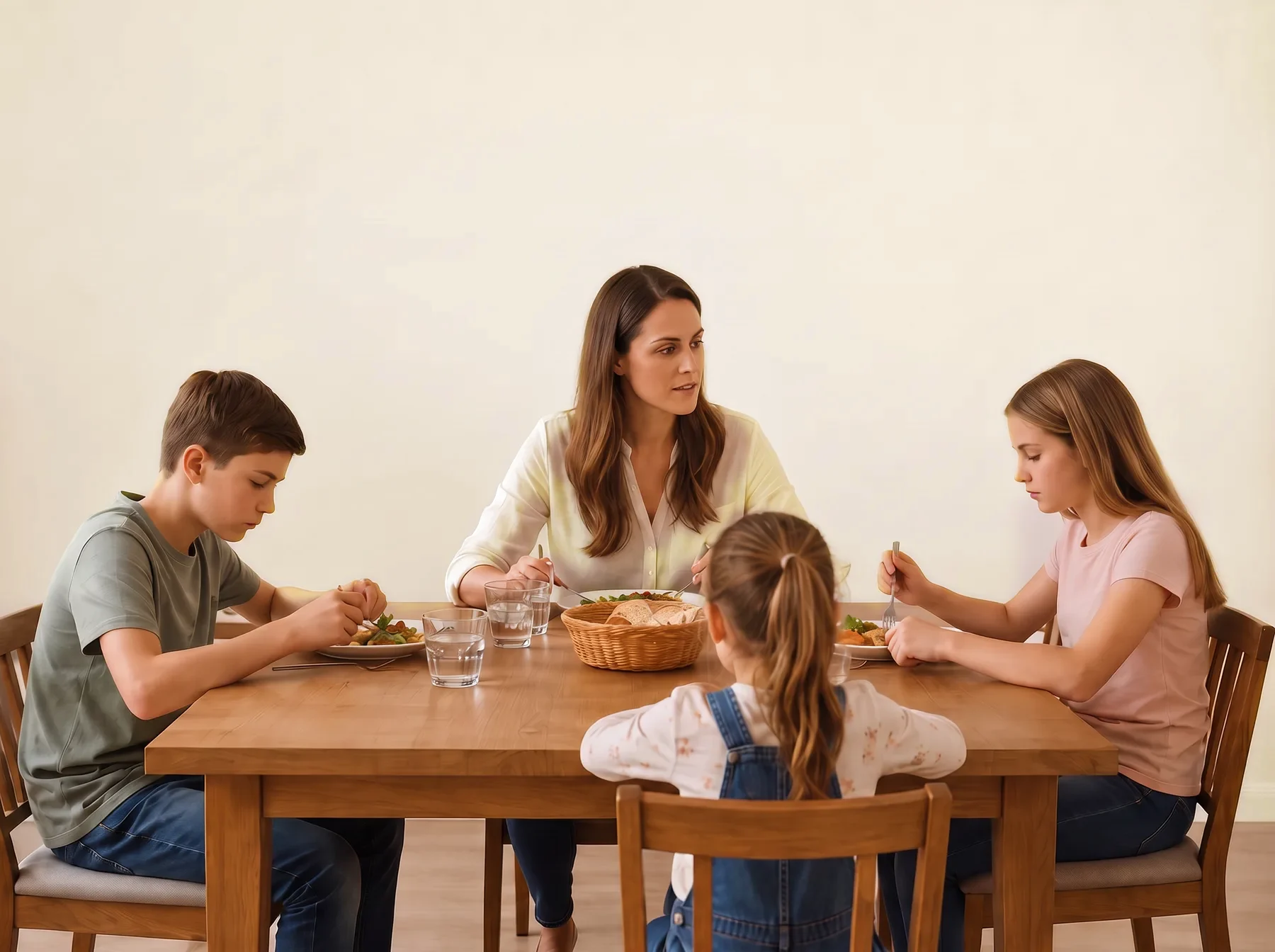
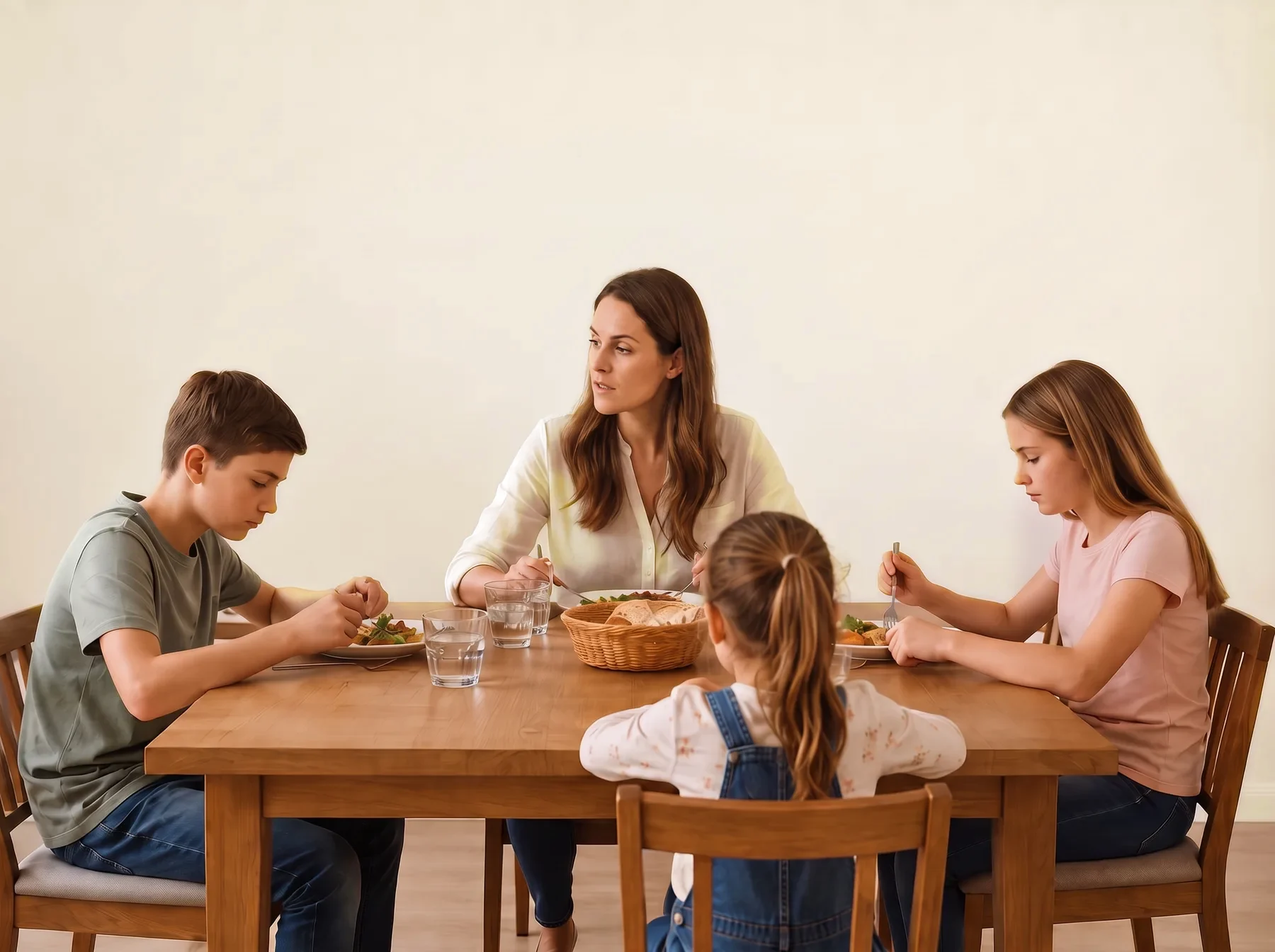
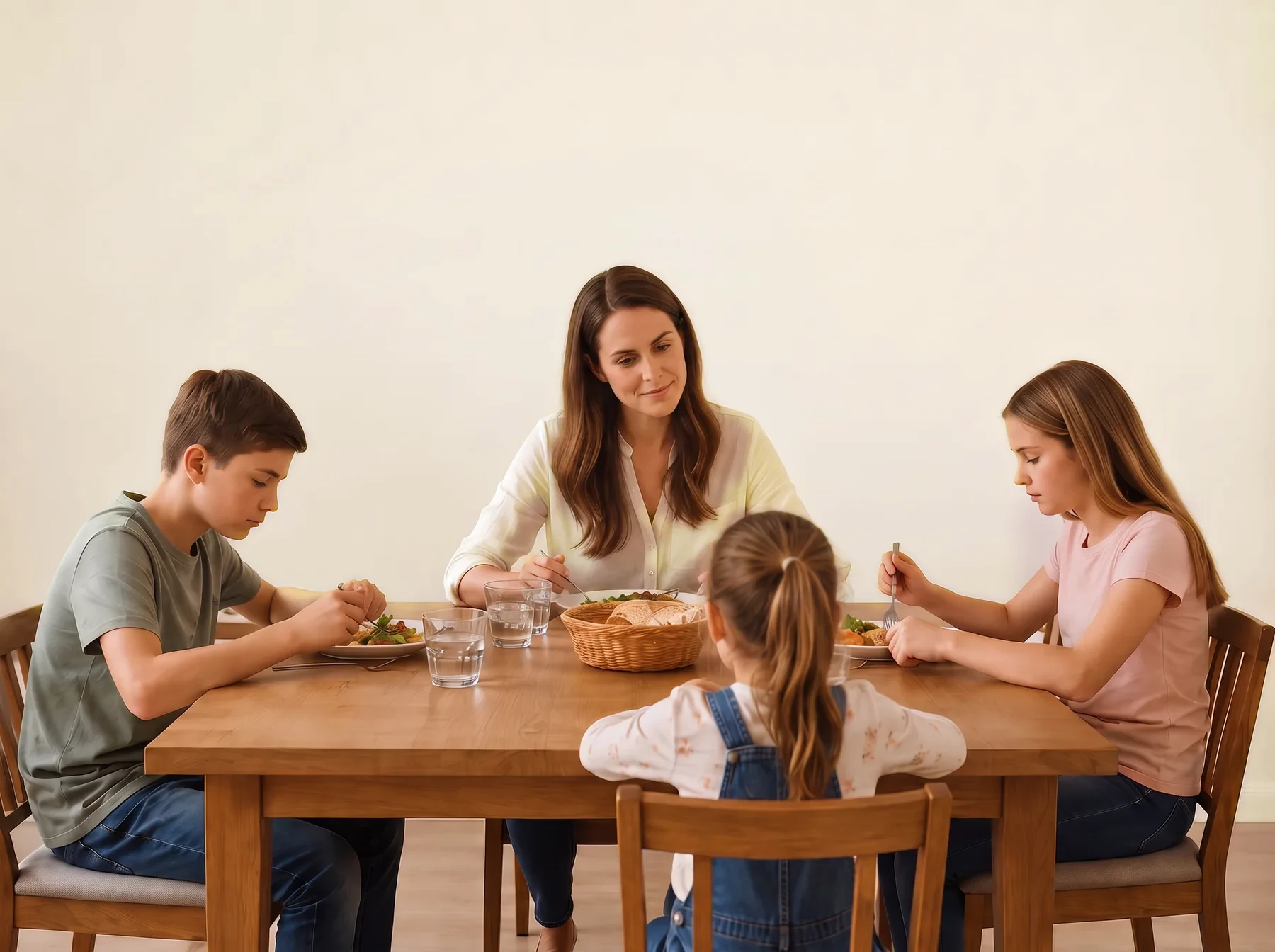
Emma at the head of the table turns to her daughter Olivia, who keeps her eyes on her plate
  • How was school today?
  • Olivia: Good. We had a quiz in history.
  • Oh yeah? How’d it go?
  • Olivia: Fine, I think I did okay.
  • What else happened?
  • Olivia: Nothing much. Just normal stuff.
Emma turns to her son Mason, who keeps eating with his eyes down
  • How about you, buddy? Good day?
  • Mason: Yeah. We played dodgeball in gym.
  • Fun! Did your team win?
  • Mason: Yeah.
  • Cool.
Emma smiles down at her youngest, Sophie, who sits with her back to the camera
  • Sophie, what did you do at school today?
  • Sophie: We did art. I made a butterfly.
  • That’s nice, sweetie.

Twenty minutes later, dinner was over.

Emma sat there thinking:

Her kids had talked. They’d answered every question.

But she still had no idea:

  • How Olivia actually felt about starting high school next year.
  • If Mason was still struggling with that mean kid he’d mentioned last month.
  • What was going on with Sophie’s friendship drama she’d heard about from the teacher.

They were talking. But only on the surface.

“I want to know what’s really going on in their worlds.”

Sound familiar?

You’re not dealing with silent kids who refuse to talk. Your kids do answer your questions.

The problem is: every conversation feels the same.

  • How was school?“Fine.”
  • What did you do today?“Nothing much.”
  • How are you doing?“Good.”

Different questions. Same surface-level answers.

They’re giving you the surface. Not what’s underneath. And you want more.

You want to know:

  • What they're worried about
  • What they dream about
  • How they really feel about things
  • What's actually happening in their inner world

But you don’t know how to get there without it feeling like an interrogation.

You’ve tried:

  • Asking deeper questions → “I don't know, Mom” or awkward silence
  • “Serious talks” → They shut down or give one-word answers
  • Googling “questions to ask kids” → You run out after 3 days
  • Forcing “quality time” → Feels awkward and forced
  • Reading parenting books → Too much theory, not enough practical help

Nothing seems to bridge the gap between surface chatter and real connection.

You’re not alone.

3.2million

parents are having the same repetitive “How was school?” “Good” conversations right now.

The questions we really want to ask:

  • Olivia, 14, sits on her bed holding her school bag, looking worried
    Olivia, 14

    How Olivia actually felt about starting high school next year.

  • Mason, 10, walks home alone from school, hands in his pockets, head down
    Mason, 10

    If Mason was still struggling with that mean kid he’d mentioned last month.

  • Sophie, 6, rests her chin on her hand beside her butterfly drawing, looking sad
    Sophie, 6

    What was going on with Sophie’s friendship drama she’d heard about from the teacher.

Here’s what’s really happening

Why “Just Ask Better Questions” Doesn’t Work

Here’s what most parenting advice tells you:

  • “Ask open-ended questions!”
  • “Show genuine interest!”
  • “Create a safe space for sharing!”

You’ve tried all that.And it still doesn’t work.

Here’s why:

01

The real problem

Question fatigue

When you ask the questions, even good ones, kids experience it as:

  • Another thing Mom/Dad wants from me
  • Pressure to have the “right” answer
  • Being put on the spot
  • Interrogation mode (even when you don't mean it that way)

So they give you the easiest, safest answer:

“Good.”“Fine.”“I don’t know.”

Not because they don’t want to share. But because the dynamic feels like pressure, not play.

A mother on the sofa reaches toward her teenage daughter, who sits with her arms crossed, looking away

02

You’re running out of questions

You’ve asked about school 1,000 times. You’ve asked about friends, sports, homework, activities.

After a while, you literally don’t know what else to ask. And your kids can sense when you’re grasping at straws.

So the conversations get shorter. More repetitive. More surface-level. Until you both settle into the pattern.

A mother leans in, smiling, to ask her son about his day; he turns away and looks at the floor
  • How was your day?
  • Mason: Good.

03

The deeper issue

You don’t know what you’re missing

Here’s the scariest part: you don’t know what you don’t know. While you’re asking about homework and soccer practice…

  • Your 14-year-old is anxious about high school and hasn't told you.
  • Your 10-year-old is dealing with a bully and keeping it quiet.
  • Your 6-year-old thinks she's not as smart as her classmates and doesn't want to worry you.
A boy cries while several hands point at him from all sides

These thoughts are happening. Right now. Inside your kids. But they don’t come up in “How was school?” conversations.

And every day that passes without these conversations… is another day those worries, fears, and feelings stay hidden.

And with time… the pattern is set.

Surface questionsSurface answers.

And breaking out of that pattern feels nearly impossible.

Until Emma discovered something that changed everything.

Introducing: Pick One Game

When the Card Asks Instead of You, Everything Changes.

Here’s what Emma discovered: when a card asks the question instead of her, walls come down.

Parent asks

“How was school?”

Resistance

It feels like Mom or Dad wants an answer. So kids reach for “Good”, “Fine”, “Nothing”.

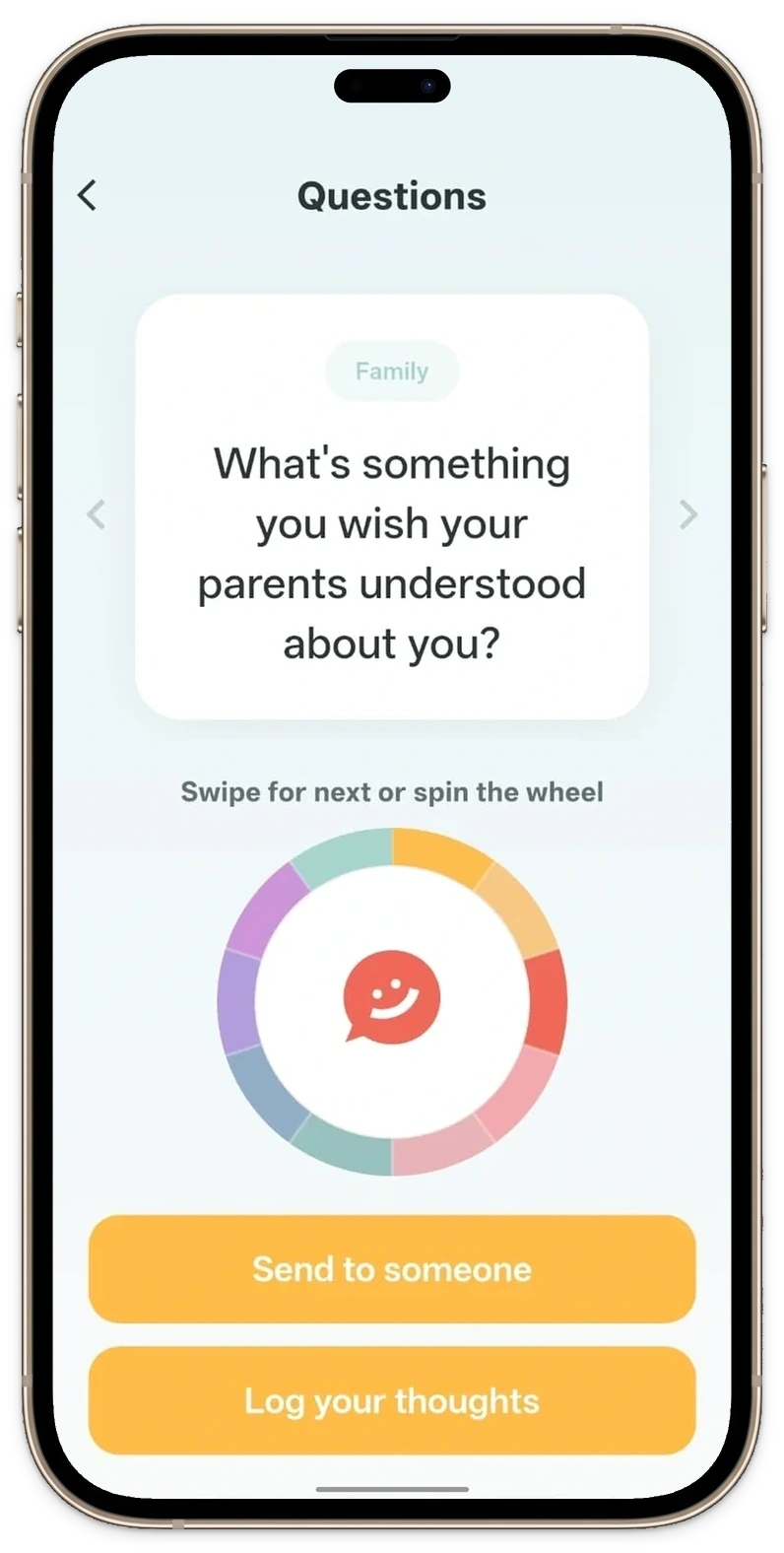
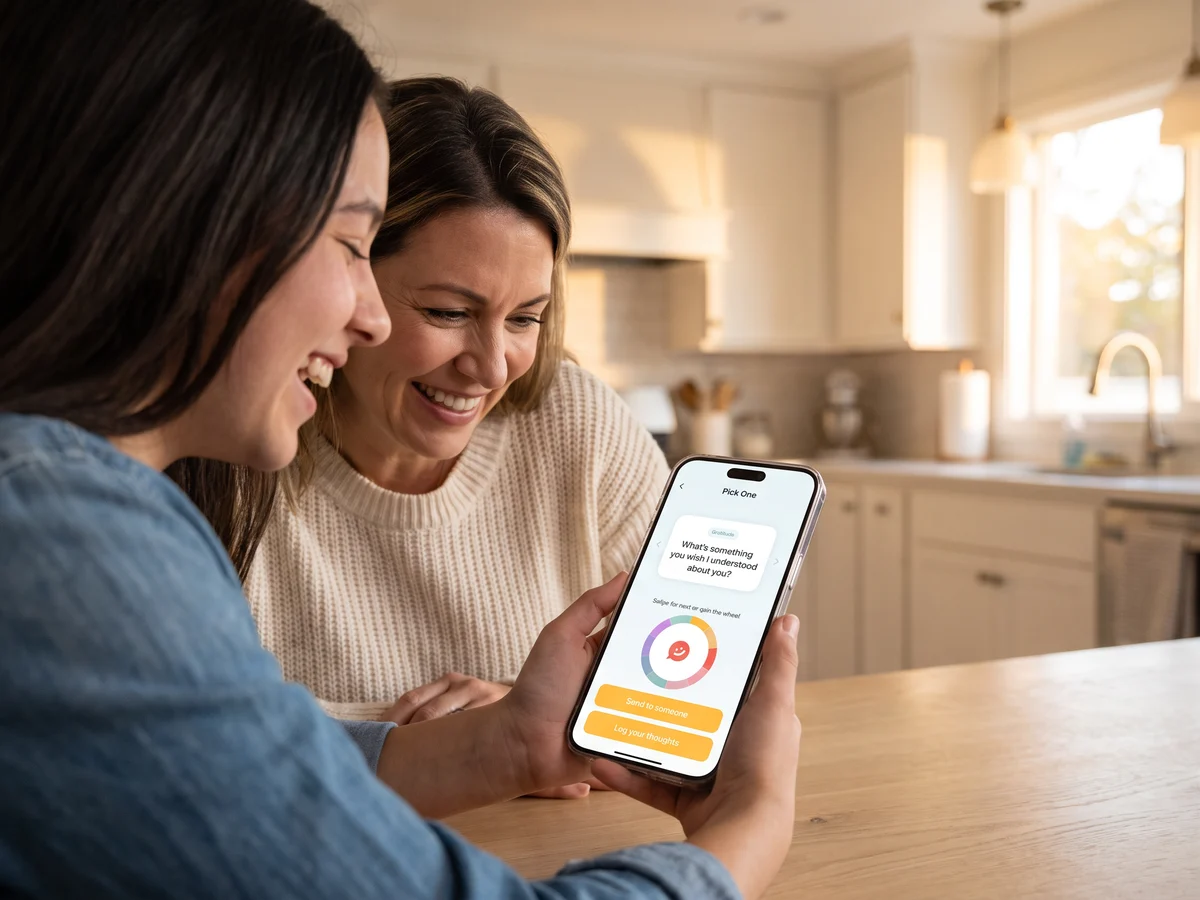
The Pick One app on a phone, showing the question “What’s something you wish your parents understood about you?”
Pick One asks

“What’s something you wish your parents understood about you?”

Openness

They’re responding to the game, not being questioned by a parent. Parents answer too, so the vulnerability is mutual.

Why? Because when the card asks:

  • Not Mom interrogatingIt’s just “playing a game.”
  • No pressure to performEveryone’s answering, not just the kids.
  • Feels like curiosity, not obligation“What’s the next question?”
  • Creates permission to be vulnerableThe structure makes it safe.
  • Zero prep requiredJust open the app at dinner, on the way to school or on a walk in the park.

Same questions. Different delivery. Completely different results.

This isn’t magic. It’s psychology.

Family therapists have known this for years: external prompts remove defensiveness. When kids feel like they’re being questioned by a parent, resistance goes up. When they’re responding to a neutral prompt (a card), resistance disappears.

It’s the same reason people open up more in therapy than at home. The therapist asks questions. Not Mom or Dad. Pick One gives you the same dynamic, at your dinner table.

A mother and her young son smile at each other beneath two Pick One question cards: “What do you hope your child remembers about their childhood?” and “Is there anyone at school you wish you could avoid? Why?”

FamilyWhat do you hope your child remembers about their childhood?

SchoolIs there anyone at school you wish you could avoid? Why?

What happened when Emma tried Pick One

Saturday Night. Week 1.

Emma was nervous. Her friend Jennifer had mentioned Pick One at soccer practice: My kids actually REQUEST these questions now.

Emma was skeptical. Another thing that wouldn’t work? But she was desperate for something, anything, to go deeper.

Dinner time. Emma pulled out her phone and opened Pick One. Want to try something fun? she asked. Olivia shrugged but stayed at the table. (That was a win.)

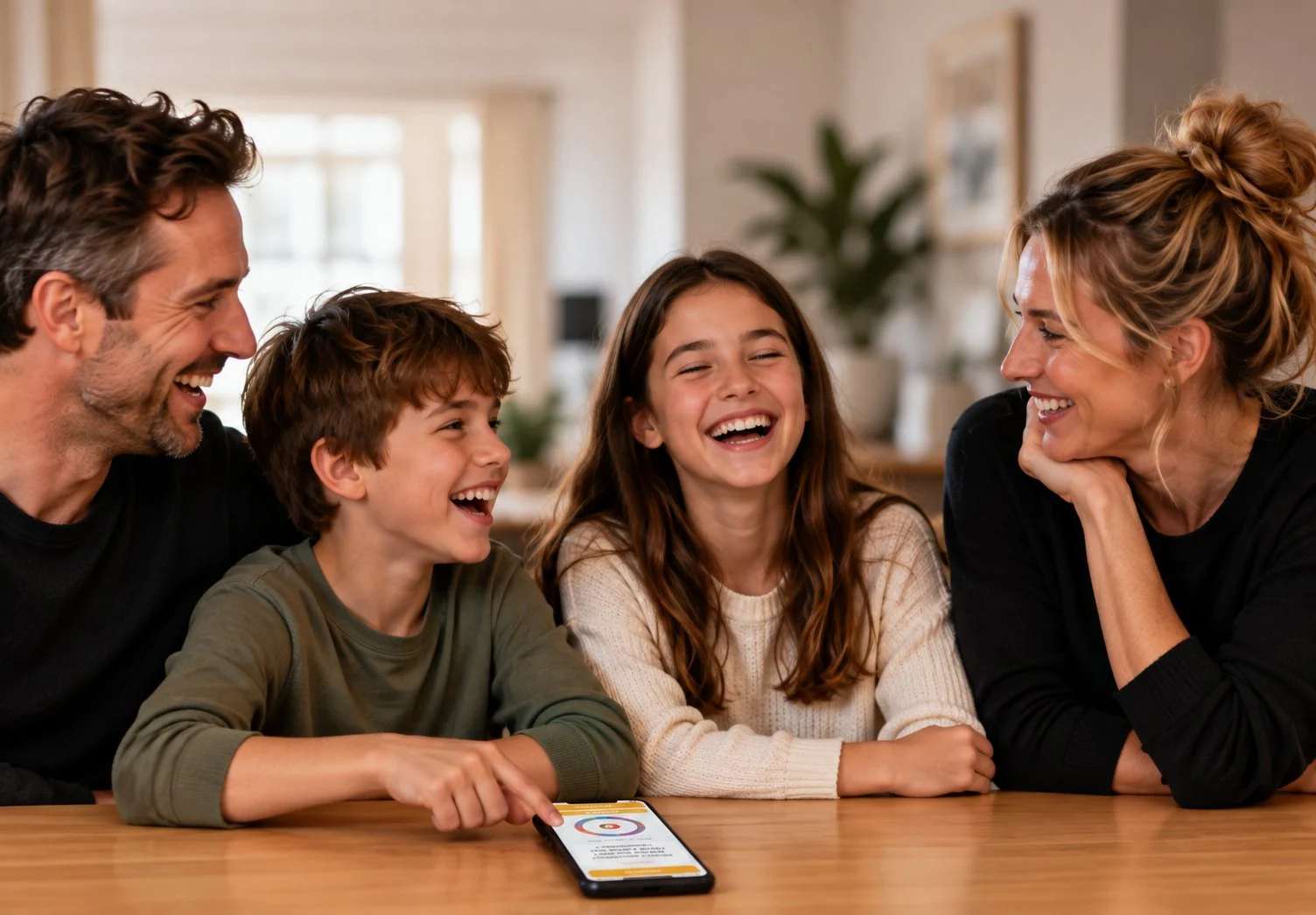
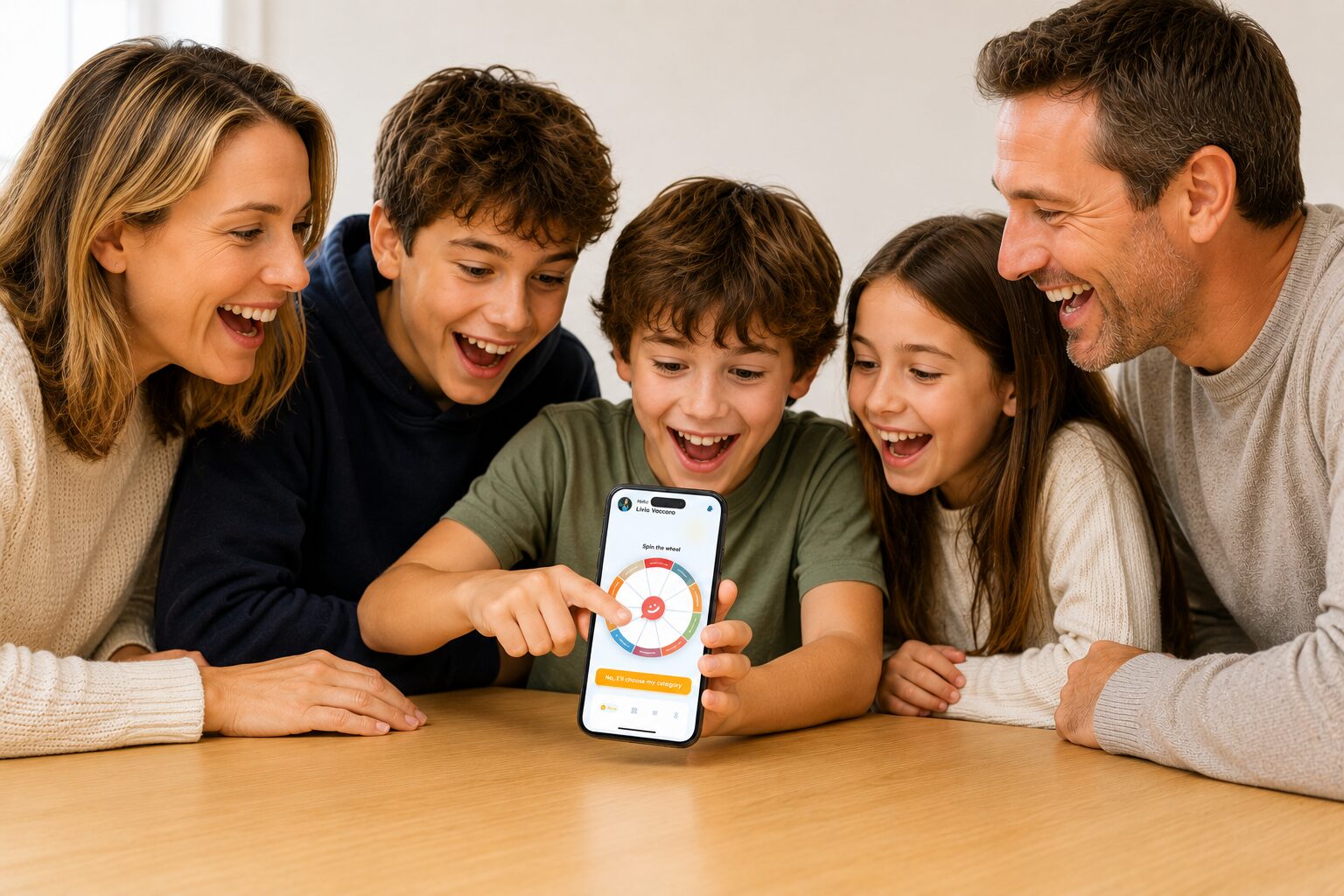
A family laughing together around the table as the boy taps the Pick One spin wheel on a phone
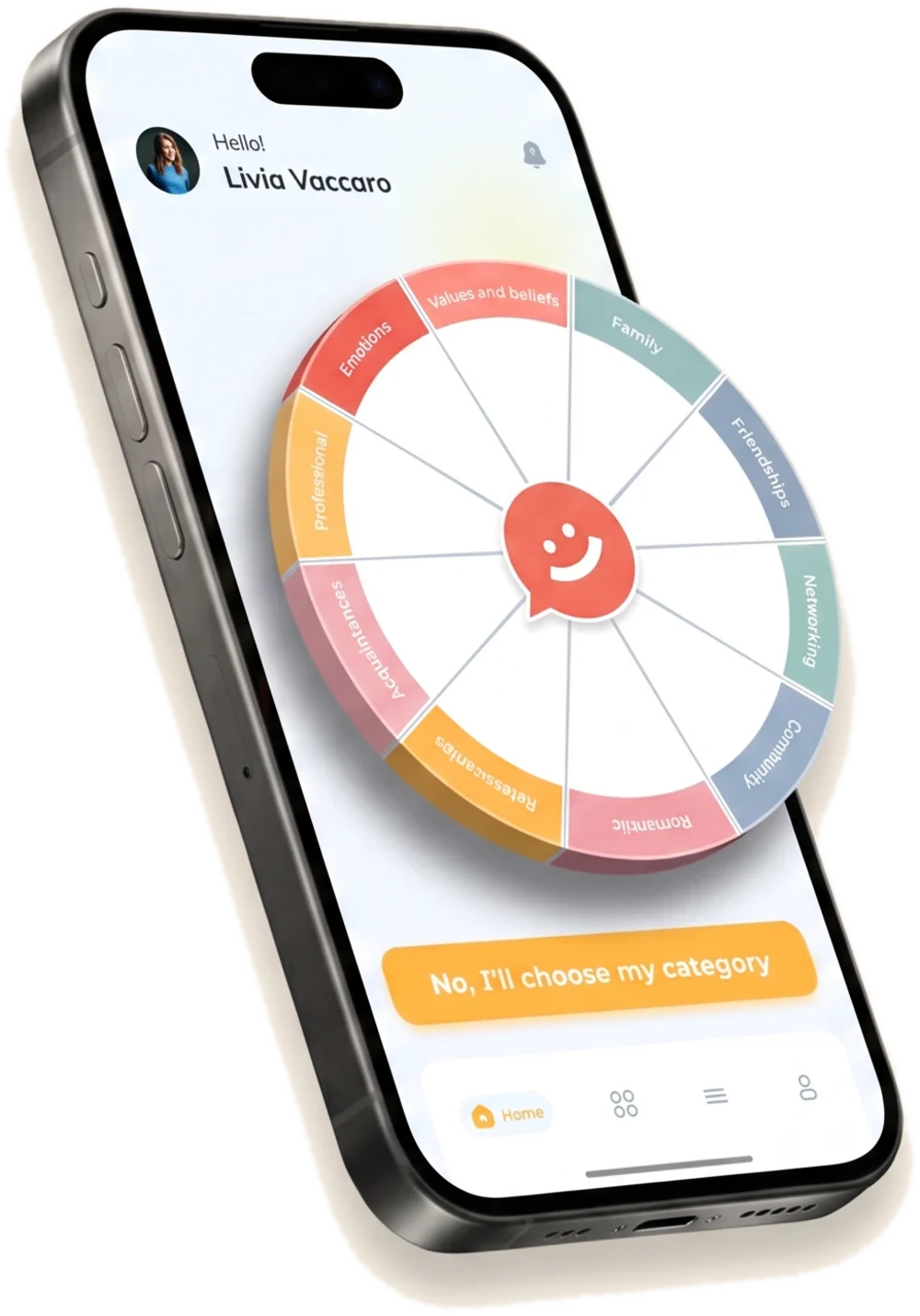
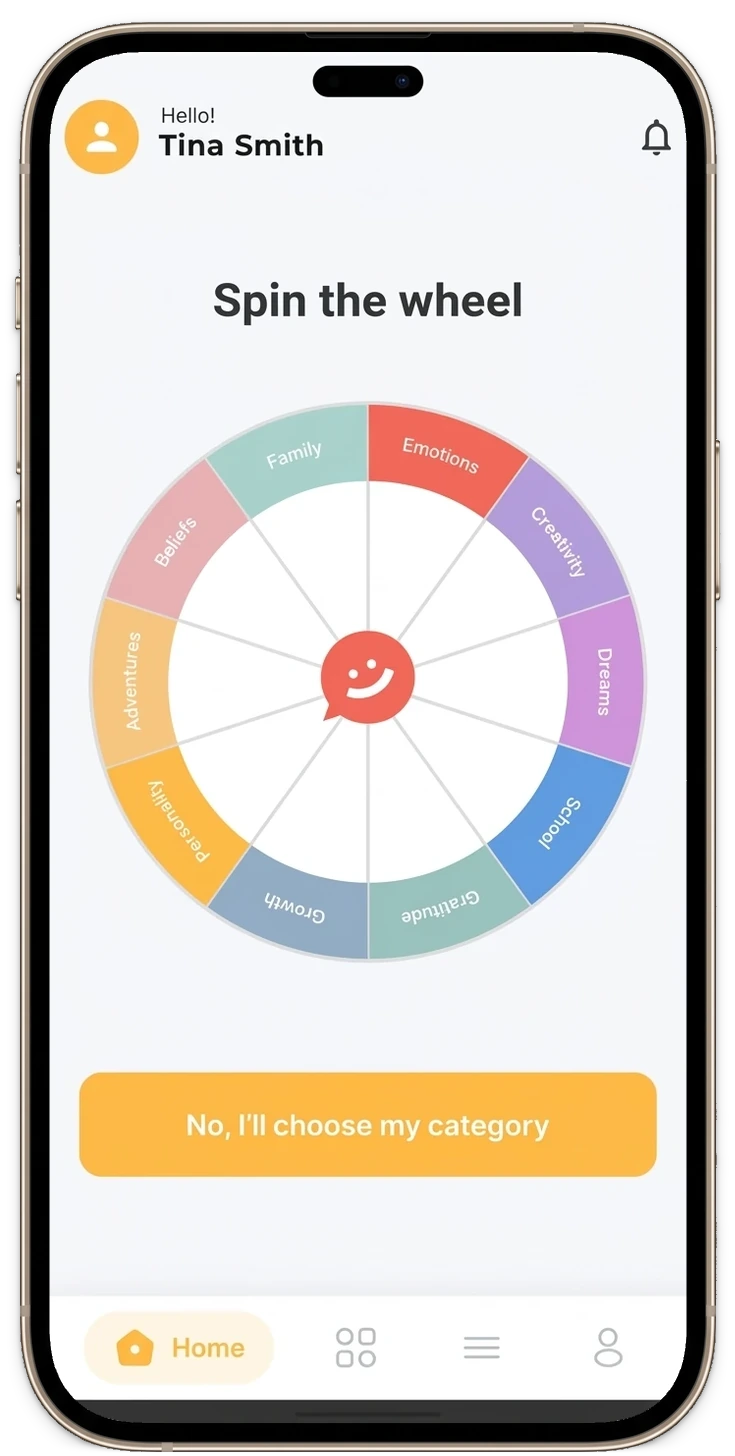
The Pick One app on a phone with the spin wheel, three question cards floating around it

CreativityCreate a new holiday. What would people celebrate and how?

FamilyWhat’s your favorite memory with me?

PersonalityWhat’s the worst advice I’ve ever given you?

  1. Spin 1

    They spin the wheel. First question:

    “What's your favorite thing about our family?”

    Sophie: “When we make pancakes on Sunday!”

    Mason: “When Dad does funny voices.”

    Olivia: “Um... I guess when we're all together.”

    Not bad. Nobody left the table.

  2. Spin 2

    Sophie pressed “Spin the Wheel” again. Second question:

    “If you could change one thing about your day, what would it be?”

    Sophie: “I'd make recess longer!”

    Mason: “I'd skip math.”

    Olivia: “I don't know... maybe lunch outside? The cafeteria is so loud.”

    Wait. Was Olivia bothered by loud cafeterias? Emma had no idea.

  3. Spin 3

    Third question. Emma held her breath. Would this be too deep?

    “What's something that scared you recently?”

    Sophie: “The dark. But I don't want to seem like a baby.”

    Mason: “There's this kid at school who's mean to people. I've been trying to help his target.”

    Mason was helping a bullied kid? When did this happen?

Then Olivia looked down. Paused.

“Honestly… I’m really nervous about high school.
Like, what if I don’t make friends?”

Emma’s heart stopped.

She had no idea Olivia was anxious about high school. No idea this fear had been weighing on her. For six months, these thoughts had been locked inside. And one question unlocked them.

They kept going. For another 45 minutes.

Nobody asked to leave. Nobody tried to grab their phone. Nobody complained about being bored. For the first time in months, Emma felt like she was actually talking to her kids.

Three Months Later:

  • They use Pick One 4-5 nights a week.
  • Sophie requests it: “Can we do question cards tonight?”
  • Olivia participates without eye rolls.
  • Mason told them about the bully (something he'd hidden for weeks).
  • Emma knows what's really happening in her kids' lives.
  • Weekends are now “Pick One weekends”, their favorite ritual.
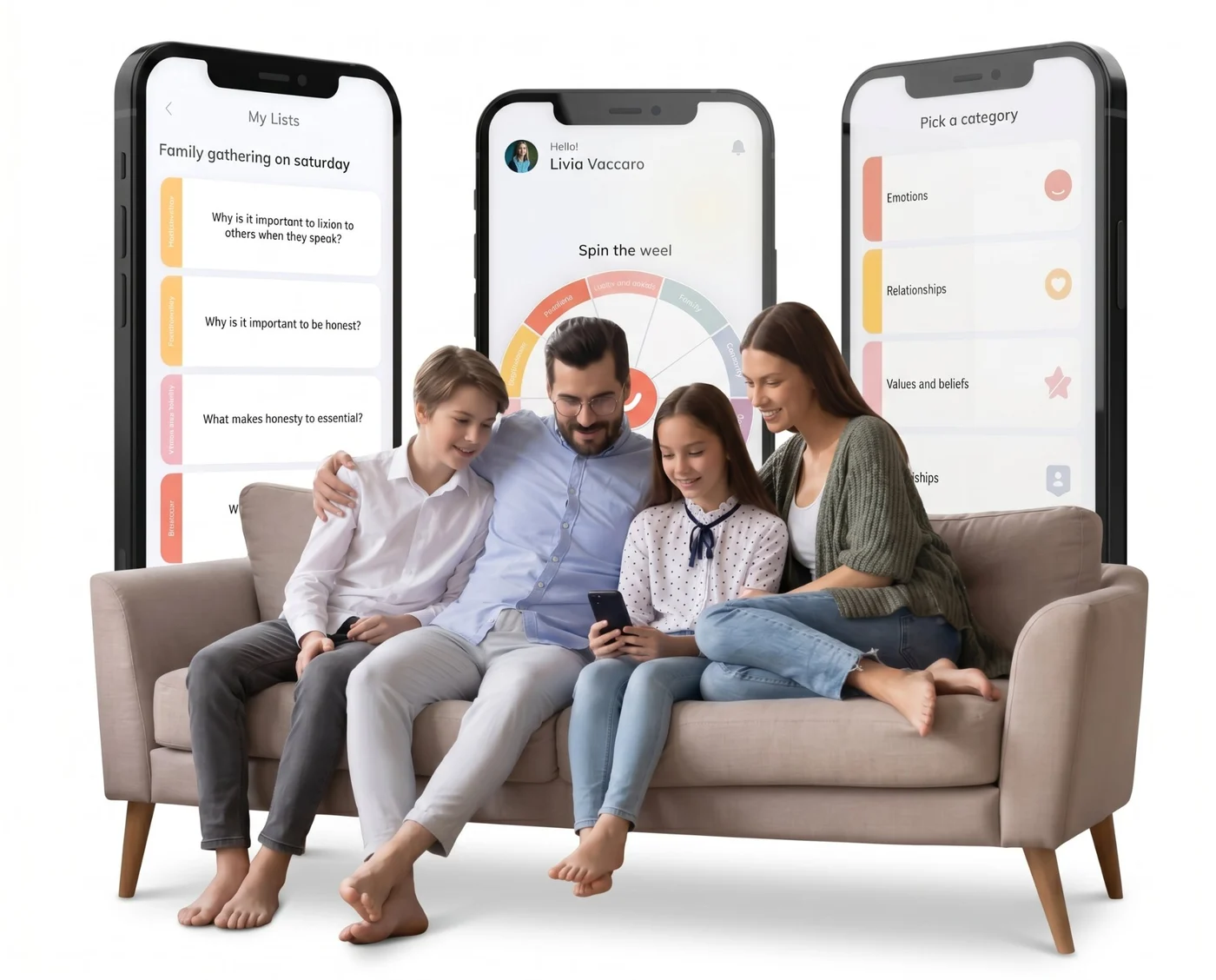
A family relaxing together on the sofa, looking at the Pick One app on a phone, with large app screens behind them

Emma got her kids back. Not the surface version. The real version.

Real parents, real results

1,247 Families Have Already Reconnected

“My 8-year-old daughter and I just had a level of conversation we've never had. I'm literally in tears typing this.”

Sarah M. · Portland

“My kids love our “Pick One” time. We do it almost every night with our 3 kids and we have a great time.”

Jennifer K. · Denver

“My 12-year-old is emotionally contained. These cards were a doorway for conversations that otherwise wouldn't have happened.”

Michael T. · Austin

“I found our family was having too many silent dinners or couch-time on phones. I gave Pick One a try and have never looked back.”

Rachel D. · Seattle

“Much better than typical “how was your day” conversations. These questions actually get my kids talking about real stuff.”

David L. · Phoenix

“Week 1 my teen rolled her eyes. Week 2 she asked if we could do it again. Week 3 she told us something she'd been hiding for months.”

Amanda S. · Boston
Here’s what you get

Pick One: Family Connection Bundle

The all-in-one digital conversation game that replaces “How was school?” “Fine” with real conversations, without carrying a single deck of cards.

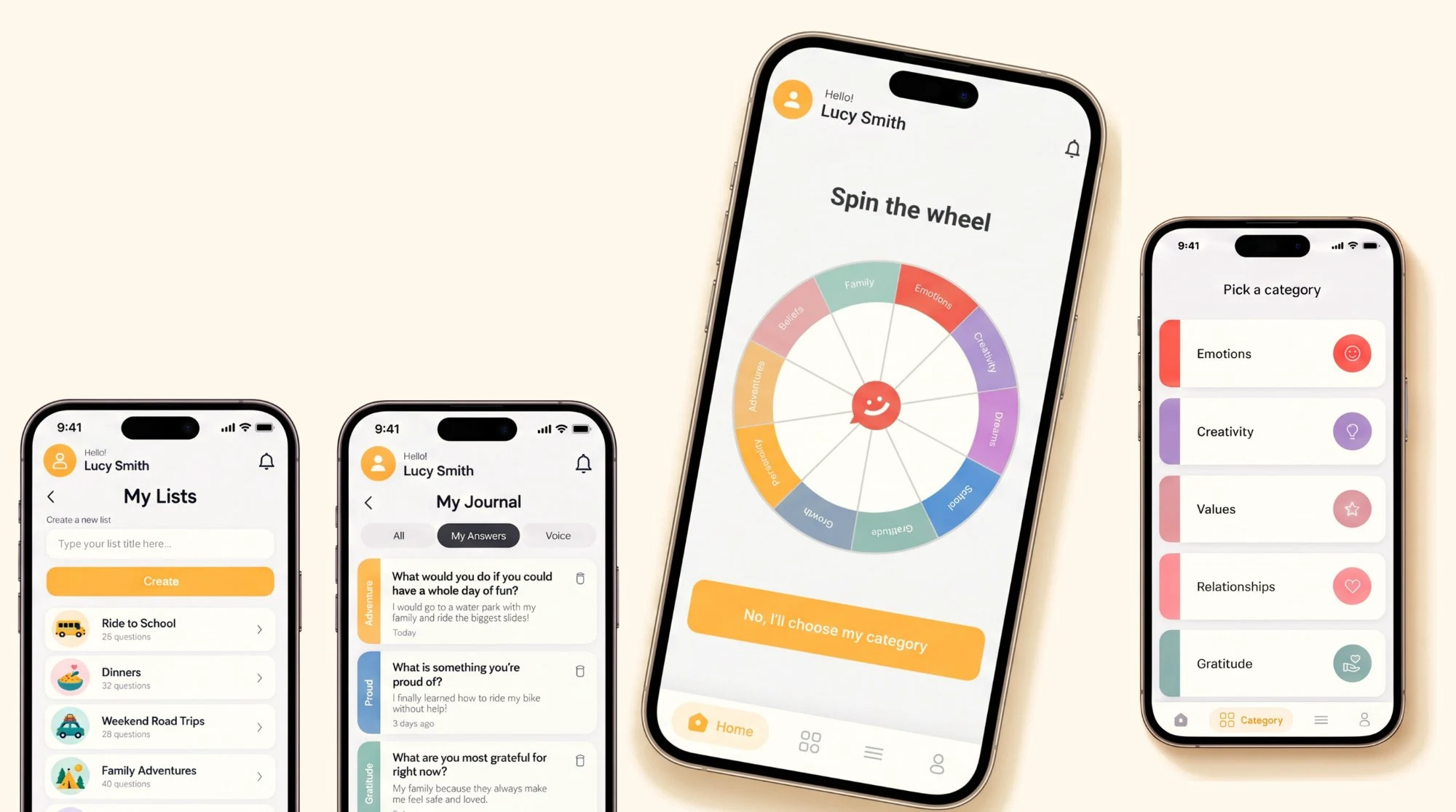
The Pick One app on four phones: My Lists for building your own decks, My Journal for saving answers, Spin the wheel, and Pick a category

One app. Every occasion. Real conversations on the go.

Questions Kids Actually Want to Answer

Spin the wheel. A new question every time.

  • Growth

    What’s a mistake you made that taught you something important?

  • Relationships

    Who is the one person outside this family you trust the most?

  • Family

    What quality do you admire in your sibling?

  • Creativity

    If you could prank anyone in this family with zero consequences, who and how?

  • Family

    What skill has your grandparent taught you?

  • Creativity

    If you could master any art form, what would it be?

  • Personality

    What do you think my secret superpower is?

  • Family

    What do you think I was like when I was your age?

The Pick One app on the Spin the wheel screen

Works for Every Age

Elementary kids, middle schoolers, teenagers. Pick One adapts to every stage.

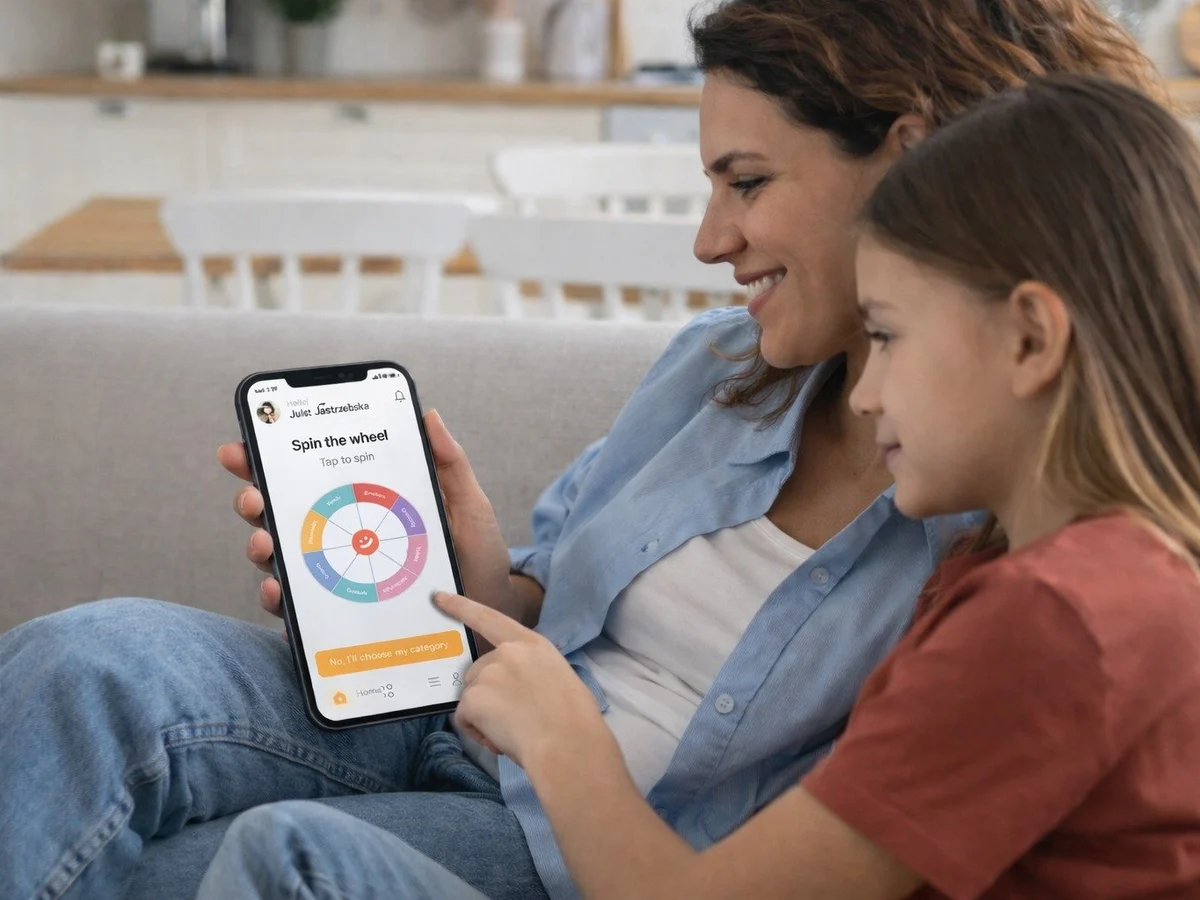
  • A mother holds the Pick One spin wheel on her phone while her young daughter taps it

    Ages 6 to 10

    Elementary kids

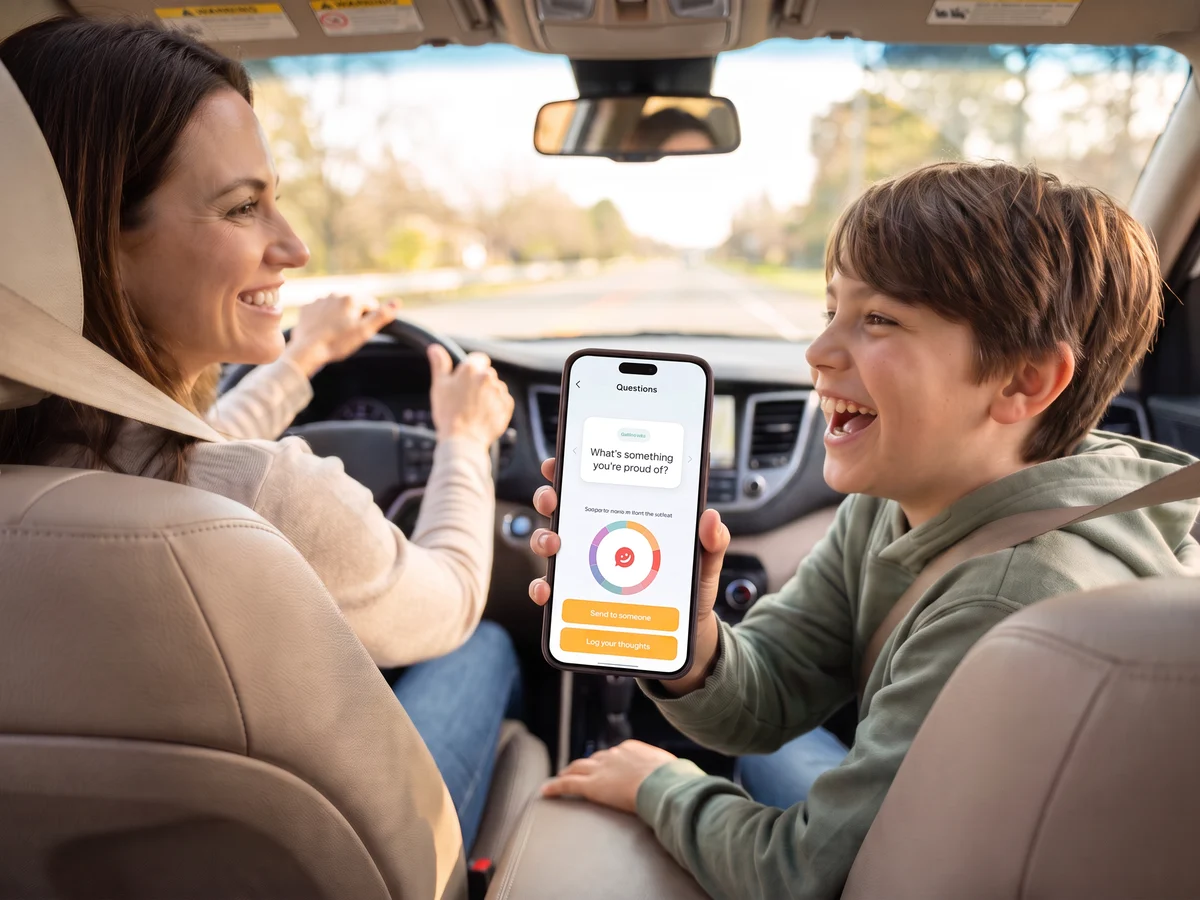
  • On a drive, a boy in the passenger seat laughs as he reads a Pick One question to his mum, who is driving

    Ages 11 to 13

    Middle schoolers

  • A teenage girl and her mother laugh at a Pick One question on the phone at the kitchen table

    Ages 14 to 17

    Teenagers

Imagination & Joy
  1. “If you could make one rule the whole family had to follow for 24 hours, what would it be?”
1 / 4
Connection & Memory
  1. “What is your favorite memory of us doing something together that didn’t cost any money?”
1 / 5
Silly & Creative
  1. “If animals could suddenly talk, which animal do you think would be the most annoying?”
1 / 4
Choose your Pick One

Two Ways to Start Tonight

Family Edition

Real conversations with your kids.

$39/ year

  • 1,600 questions across 10 categories
  • Spin the Wheel for random question surprises
  • Starter Pack for easy first-time use
  • Customize your deck based on who's playing
  • Share questions with friends and loved ones
  • Write or record audio answers to save memories
  • 100% digital: always in your pocket, no cards to carry
  • Works offline: use anywhere, anytime
Get Family Edition: $39/year
★ Most popular

Family Edition + 365

Reconnect with your kids. Reconnect with your partner. One app for both.

$69/ year

  • Everything in Family Edition, plus:
  • Deep Connection Questions: go beyond logistics with your partner
  • Intimacy & Vulnerability: questions that reignite emotional closeness
  • Milestone Celebrations: anniversary, date nights, special moments
  • 365 Days for Couples: one question a day for daily connection
Get the Bundle: $69/year

“But Will This Work for My Family?”

“My teenager will refuse to participate.”

Here’s what actually happens: 87% of parents said their teen rolled their eyes the first time. Then something interesting happened. When they heard their siblings answering… curiosity kicked in.

“What’s the question?” turned into participation. By week 2, most teens were requesting it.

Why? Because it doesn’t feel like parent pressure. It’s just a game. Plus, teenagers have FOMO. When everyone else is sharing, they don’t want to be left out.

“This will feel forced and awkward.”

It’s awkward for about 30 seconds. Then someone answers the first question. Then someone else adds their answer. Then it becomes the most natural conversation you’ve had in weeks.

1,247 families said the same thing before trying it. Now it’s their favorite family ritual.

“My kids are too young/too old for this.”

We have questions for ages 6-17.

  • Age 6“What makes you happy?”
  • Age 10“What’s something you’re good at?”
  • Age 14“What’s something that’s been on your mind lately?”
  • Age 17“What’s something you wish people understood about you?”

Every age. Every stage.

“We already talk at dinner. This won't add anything.”

Real question: are you having conversations, or just asking the same questions every night? Because there’s a difference between “How was school?” “Good.” silence, and 45-minute conversations where you learn:

  • Your daughter is anxious about fitting in.
  • Your son is helping a bullied classmate.
  • Your youngest is scared of seeming “babyish”

Pick One turns dinner into an actual connection.

“I can just Google conversation starters for free.”

You’ve probably already tried that. Did it work?

Random Google listsGeneric questions that don’t build on each other. You run out in 3 days.

Pick One1600+ questions designed to create progressive depth, tested on 1,247 families, organized into 10 different categories.

Plus: the app does the work. No Googling. No planning. No running out. Just open and spin the wheel.

“What if we run out of questions?”

1600+ questions = 1600+ conversations. And here’s the thing: answers change over time.

Ask “What are you most afraid of?” when your kid is 10. Ask again at 13. Totally different answer. Questions are reusable forever.

“This is just another thing I'll buy and never use.”

That’s why Pick One takes zero effort. No planning. No setup. No “finding time.” It’s already on your phone. Pull it out at dinner. That’s it.

If it takes more than 15 seconds, you’re overthinking it.

One app. One question.
One real conversation.

Just one question.

on your phone, at dinner, in bed before sleep, on a drive, and the conversation that follows. The one you’ve been missing.

Get Pick One Now